
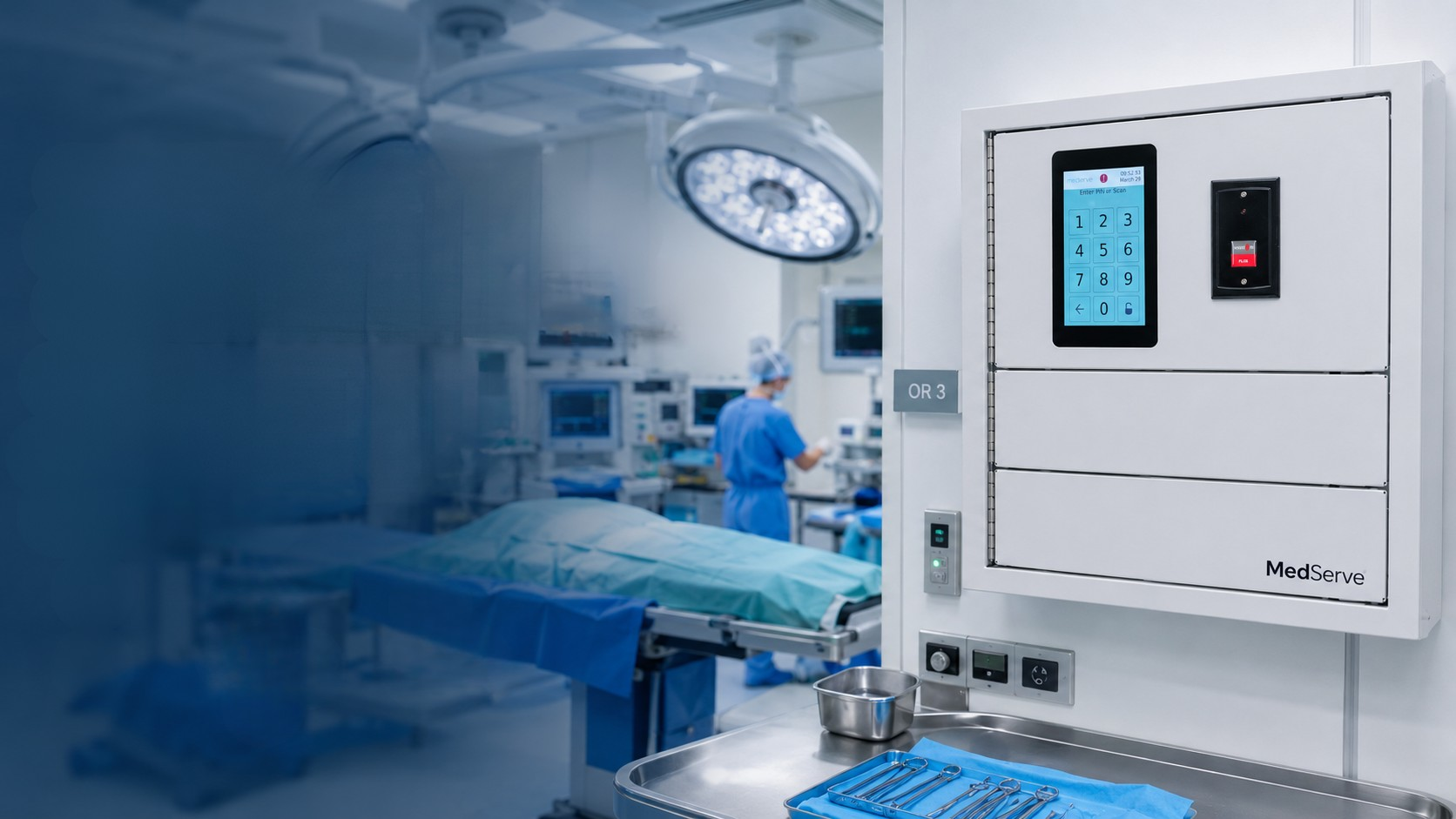
OUTPATIENT SURGERY CENTERS
ASC medication management: what outpatient surgery centers need to know
Why hospital-grade systems don't work in ASCs, what to look for instead, and how leading surgery centers are solving it
THE ASC PROBLEM
Why medication management is harder in ASCs
Surgery centers carry the same controlled-substance obligations as a hospital with a fraction of the staff and infrastructure to meet them.
No pharmacy to lean on
There's rarely an on-site pharmacist or a dedicated diversion officer. Compliance lands on the nurses and administrators already running cases.
Hospital systems don't fit
Inpatient dispensing cabinets are sized, priced, and configured for large facilities, too big for an OR wall and too costly for a center's volume.
Manual counts, real risk
When narcotics are still logged on paper, discrepancies surface late, if at all. The gap between access and reconciliation is where diversion hides.
THE EVALUATION CHECKLIST
What to look for in an ASC medication management system
Right Size
The system should fit where care actually happens. The OR, the PACU, the med room, without a dedicated pharmacy footprint. Wall-mounted modular cabinets beat floor-standing inpatient towers.
Right Cost
Pricing should match the volume of a surgery center, not an inpatient hospital. Look for a model where you only pay for the capacity you actually use.
EHR compatibility
The system should connect to the EHR and workflows you already run, not force a parallel set of logs.
Right Experience
Clinicians, not technicians, run the floor. The system should be operable by nurses on day one, with no specialized IT staff to keep it running.
Audit-ready reporting
Reports should be DEA-ready and exportable on demand, not assembled by hand. When an inspector or board asks, the record should already be complete.
Real-time visibility
Every access, count, and discrepancy should be visible the moment it happens. Waiting for end-of-day reconciliation is how diversion goes unnoticed.
What ASC leaders are saying
THE MEDSERVE APPROACH
How MedServe approaches ASC medication management
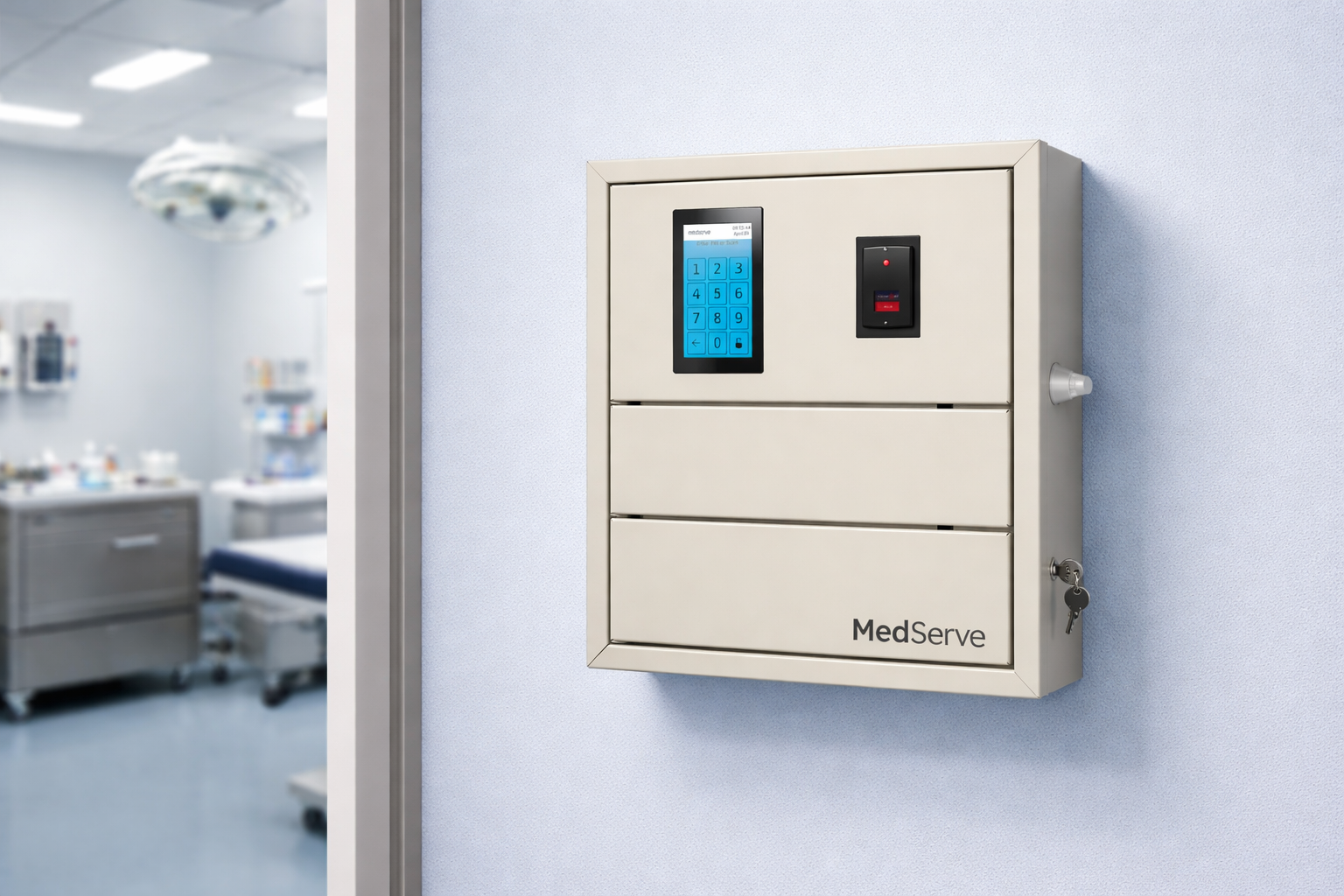
COMPACT MODULAR HARDWARE
Built to live where the case happens
Cabinets mount on the wall in the OR or PACU, right beside the procedure. Each module is sized for a surgery center's volume. add capacity as you grow instead of installing a floor-standing tower you'll never fill.
1/4
THE FOOTPRINT
Wall-mount
OR & PACU READY
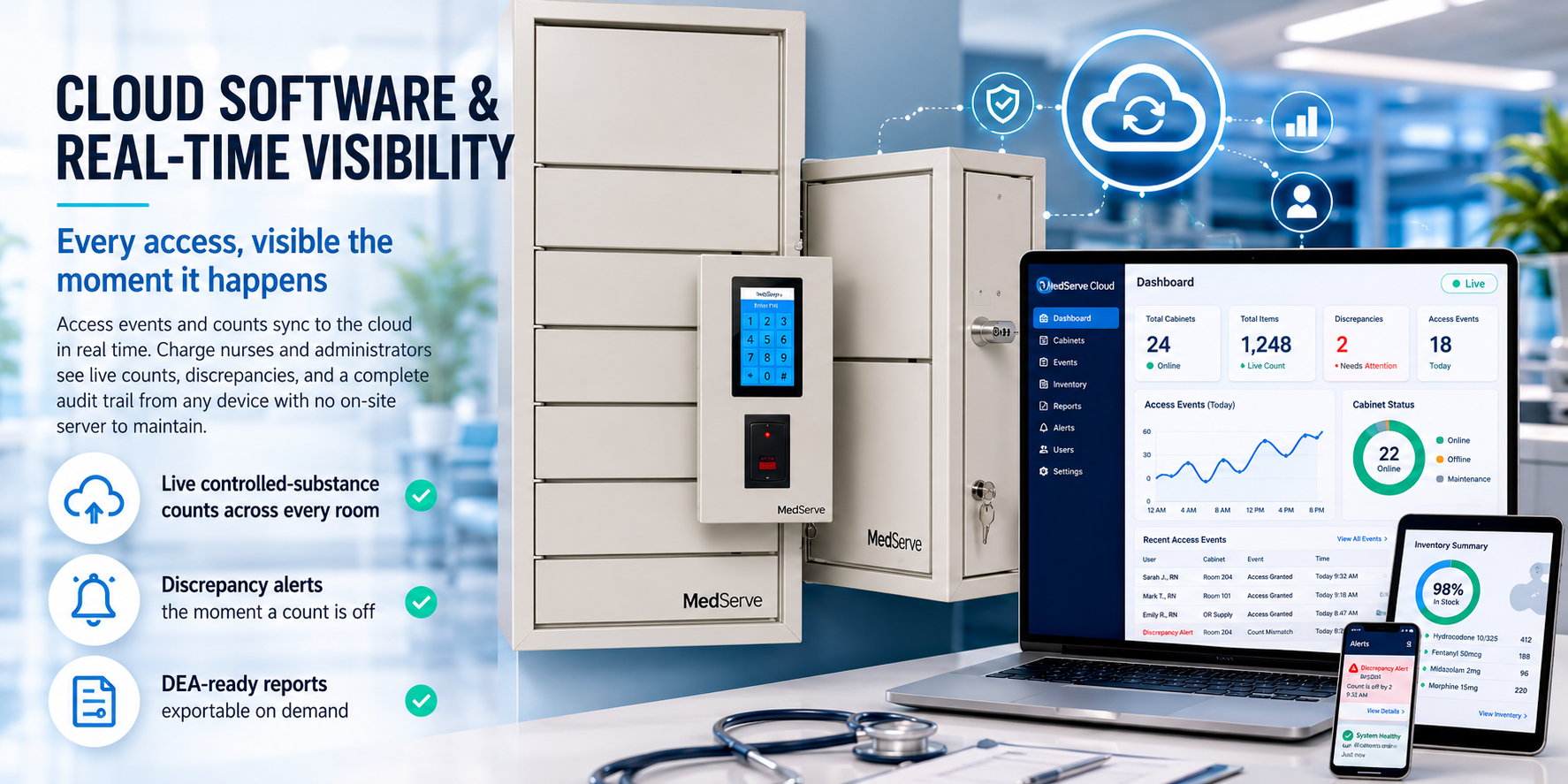
CLOUD SOFTWARE & REAL-TIME VISIBILITY
Every access, visible the moment it happens
Access events and counts sync to the cloud in real time. Charge nurses and administrators see live counts, discrepancies, and a complete audit trail from any device with no on-site server to maintain.
✅ Live controlled-substance counts across every room
✅ Discrepancy alerts the moment a count is off
✅ DEA-ready reports exportable on demand

SIMPLE IMPLEMENTATION & SECURE STORAGE
Live on day one, locked to the user
Clinicians operate it from the first case. No specialized IT staff, no costly technicians. PIN access keeps controlled substances secured to the individual user, with a tamper record on every door.
THE FIT CHECK
Is MedServe right for your surgery center?
MedServe is built for the outpatient surgery center. If your facility looks like the list below, it's worth a closer look.
Frequently Asked Questions
-
Hospital medication management systems like Pyxis and Omnicell were designed for large inpatient facilities with centralized pharmacies, dedicated pharmacy staff, and high medication volumes. They are built around a model where medications are stored in one central location and staff travel to access them. ASCs operate completely differently — smaller spaces, leaner teams, faster case turnover, and multiple ORs running simultaneously. A system built for a hospital requires workarounds to function in an ASC environment. A system built for an ASC fits the workflow as it actually exists — with hardware that lives in the OR, software that clinical staff can operate without IT support, and a cost model that fits an outpatient budget.
-
The most reliable way to improve DEA compliance is to eliminate manual documentation. Paper-based narcotic logs create risk at every step — missed entries, illegible handwriting, incomplete witness records, and running totals that drift. Digital medication management systems record every controlled substance transaction automatically, maintain accurate running totals in real time, require witness verification for counts and waste, and generate audit-ready compliance reports on demand. ASCs that switch to digital narcotic management consistently report stronger compliance posture and significantly less stress around survey readiness.
-
Drug diversion in ASCs is most effectively prevented through a combination of access control, real-time visibility, and automated documentation. Access control ensures only authorized staff can open specific bins and that every access is tied to a specific user, medication, and destination. Real-time visibility means administrators can see every transaction as it happens rather than discovering discrepancies after the fact. Automated documentation eliminates the gaps and inconsistencies in paper logs that diversion often exploits. When every action is recorded automatically and discrepancies trigger immediate alerts, the opportunity for diversion shrinks significantly.
-
MedServe is the only medication management system built specifically for outpatient surgery centers that combines real-time inventory tracking, automated controlled substance logging, and cloud-based compliance reporting in a compact, clinician-operated system. Unlike hospital-grade systems that require pharmacy staff and complex implementation, MedServe is designed to be installed and maintained by clinical teams and sized to fit directly in ORs, PACUs, and procedure rooms. Every transaction is logged automatically and synced to the cloud in real time so inventory levels and compliance records are always current.
-
The key is replacing manual steps with automated ones. Most of the administrative burden in controlled substance management comes from manual documentation — paper logs, handwritten counts, chasing witness signatures, and end-of-day reconciliation. When those steps are handled automatically by a digital system, clinical staff spend less time on paperwork and more time on patient care. The surgery centers that have streamlined controlled substance workflows most effectively are the ones that moved documentation from a manual process to an automatic one — where the system records what happens as it happens, without requiring staff to do anything extra.
-
Implementation timelines vary by facility but MedServe is designed for fast deployment. Unlike hospital-grade systems that require buildouts, EHR integrations, and technical overhead, MedServe can be installed and operational quickly without a pharmacy team or IT department. MedServe's implementation team customizes the formulary, onboards users, and integrates with your EHR as part of the setup process. Most facilities are fully operational within days of installation.
-
Five things matter most for an ASC evaluation. First, does the hardware fit your physical space — compact enough to live in the OR rather than a centralized location? Second, is the cost model built for outpatient economics rather than hospital budgets? Third, can clinical staff operate and maintain it without IT support? Fourth, does it provide real-time visibility and automated compliance reporting? Fifth, does the vendor have experience specifically with ASC environments rather than adapting a hospital product? A system that scores well on all five is built for outpatient surgery — not modified to fit it.