Hospital Expectations Are Moving into ASCs: What That Means for Staffing and Compliance
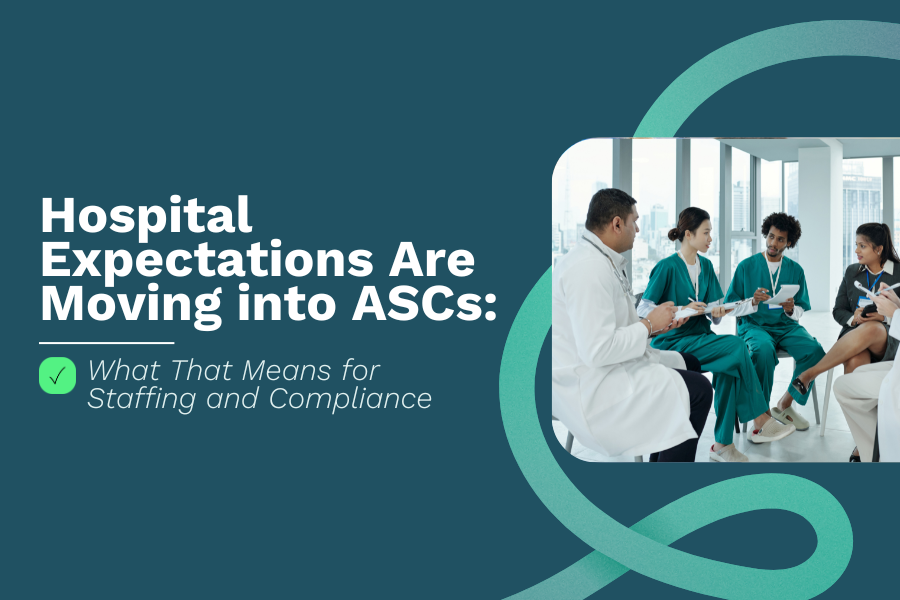
As case complexity increases, your medication infrastructure needs to keep pace
As we enter 2026, the ASC payment rule continues accelerating the shift of more complex procedures from hospitals into ambulatory surgery centers. For ASC leaders, this transition represents both tremendous opportunity and operational challenge—particularly when it comes to staffing.
The Staffing Gap Nobody Talks About
Hospital-trained clinicians expect hospital-grade medication systems
With more complex cases come clinicians who trained in highly automated hospital environments, where medication dispensing systems are standard infrastructure. When these experienced professionals join ASC teams, they often encounter a stark contrast in medication management capabilities.
"When you hire people who come from a hospital background, they're used to medication dispensing systems. Not having that creates friction and impacts hiring," explains Judy Townsley, Administrator at the Center for Spine Surgery, LLC.
This isn't just about preference—it's about operational reality. Clinicians accustomed to automated medication tracking, electronic documentation, and real-time accountability systems find manual processes frustrating and inefficient. More importantly, these gaps can directly impact your ability to attract and retain the specialized clinical talent needed for increasingly complex caseloads.
From "Nice to Have" to Clinical Standard
Medication automation now influences recruiting, retention, and performance
Medication safety and accountability have evolved from optional enhancements to baseline expectations that influence:
Recruiting competitiveness – Top-tier clinical talent now expects the same safety infrastructure they had in hospital settings
Staff retention – Operational friction from outdated processes contributes to turnover in an already challenging labor market
Clinical performance – Manual medication tracking increases documentation burden, diverting time from patient care
Regulatory compliance – As case complexity increases, so does regulatory scrutiny around controlled substance management
What This Means for Your 2026 Planning
Now is the time to assess your medication management infrastructure
As you map out your strategic priorities for the year ahead, medication management infrastructure deserves serious consideration.
Ask yourself:
Does our current medication management system support the complexity of cases we're now performing?
Are we losing qualified candidates to facilities with more modern medication infrastructure?
How much clinical time is consumed by manual documentation and reconciliation?
Are we prepared for the DEA compliance expectations that come with increased controlled substance utilization?
The Path Forward
ASCs can implement hospital-grade solutions without hospital-scale budgets
The good news? ASCs don't need hospital-scale budgets to implement hospital-grade medication automation. Purpose-built solutions now exist that deliver the accountability, efficiency, and compliance benefits clinical teams expect—scaled appropriately for the ASC environment.
The question isn't whether to modernize medication management, but rather how quickly you can implement solutions that support both your clinical migration and your staffing strategy.
Let's talk about what modern medication management could look like in your ASC.